A host is supposed to harvest the world’s goodwill, not burn it.
agrupados por: america
▸ +1 coberturas · 2 fuentes · consenso alto
A senior US official who briefed reporters on condition of anonymity about the trip said Trump will meet with Zelensky on Wednesday to discuss "how we can end the war."
agrupados por: summit
▸ +18 coberturas · 10 fuentes · consenso alto
agrupados por: ties
▸ +1 coberturas · 2 fuentes · consenso alto
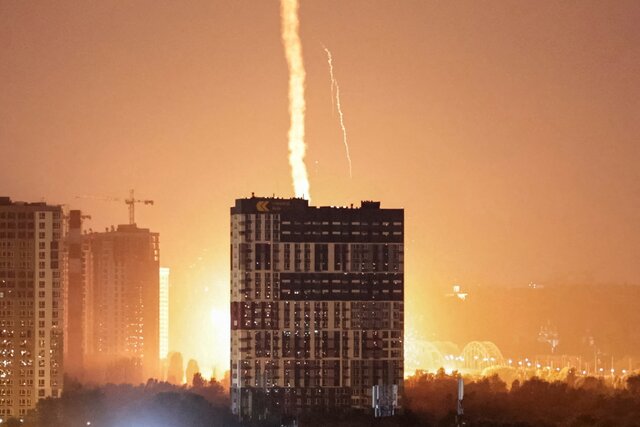
Russian strikes on the Ukrainian capital Kyiv killed at least 14 civilians and injured more than 80 others overnight on Monday, according to local authorities.
agrupados por: fleet · kyiv · shadow
▸ +3 coberturas · 4 fuentes · consenso alto
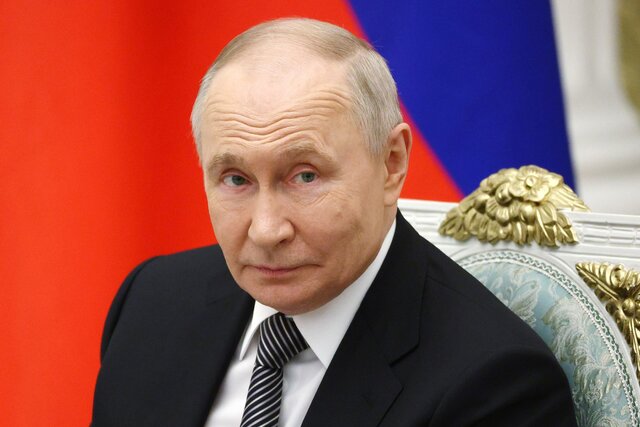
Russian President Vladimir Putin is dismissing proposals for peace talks with Ukraine and is likely to escalate the war, the Reuters news agency reported, citing three sources close to the Kremlin.
agrupados por: putin
▸ +1 coberturas · 2 fuentes · consenso alto
It’s a gamble for both leaders. But the US president showed how effective this tactic can be.
agrupados por: farage · nigel
▸ +1 coberturas · 2 fuentes · consenso alto
Germany and France are at the center of a clash over the alliance’s future.
Iranians in Europe say governments aren’t taking threats from Tehran seriously.
With Patriot interceptors in short supply, President Trump’s statement that he would allow Ukraine to build them is a boon to Kyiv as it fights off Russian missile attacks. But it is just the start.
agrupados por: defend · help
▸ +1 coberturas · 2 fuentes · consenso alto
The language of the “new era” leaves real reform behind.
Alliance members tout defense investments to try to head off Trump’s complaints.
The United States has recast a small industry as a national security threat.
France remains committed to bolstering cooperation with Syria.
agrupados por: begins · trial
▸ +1 coberturas · 2 fuentes · consenso alto
The secretary of state must be seen as the chief architect of the Trump administration’s assault on the rules-based order.
Confidence in the Strait of Hormuz has been shattered. Trust is now among the most important commodities in the energy world.
agrupados por: real · time
▸ +1 coberturas · 2 fuentes · consenso alto
Read the text outlining agreements at the 2026 NATO summit in Turkey.
The overlooked technology wreaked havoc on the Strait of Hormuz—and global trade.
Extreme heat events are threatening the alliance’s plans.
The U.S.-Iran deal has devolved into fighting again, with potentially ugly implications for oil prices.
The country has agreed to invest interest savings in its electric grid.
agrupados por: economic · growth
▸ +1 coberturas · 2 fuentes
Belief in Kremlin narratives dehumanizes Ukrainians and sustains the will to fight.
The Indian prime minister visits Indonesia, Australia, and New Zealand this week.
Trump calls continued peace talks a “waste of time” as strikes resume.
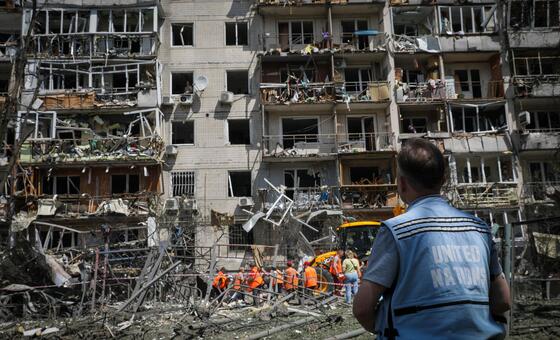
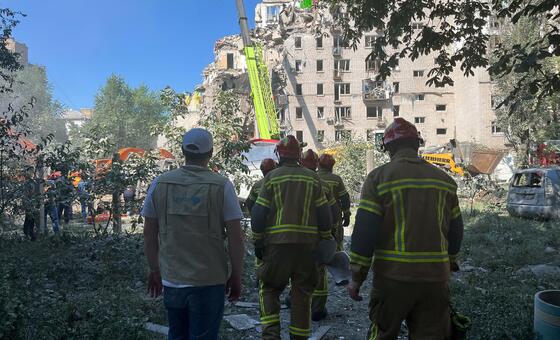
Aid agencies in Ukraine on Thursday rushed to respond to a massive uptick in deadly strikes by Russia, including one of the largest attacks on Kyiv to date.
agrupados por: work
▸ +1 coberturas · 2 fuentes · consenso alto
Ali al-Zaidi tackles a perpetual challenge under the watchful eyes of Iraqis and Washington.
Russian forces struck Kyiv with ballistic missiles and drones in the early hours of July 6. According to data from the Ukrainian Air Force command, a total of 68 missiles of various types and more than 350 drones (including decoy drones) were launched against Ukraine. Kyiv was the primary target. Ai…
agrupados por: kyiv · strikes
▸ +2 coberturas · 3 fuentes · consenso alto
One of history’s most misunderstood speeches is also one of its most important.
Sen. Tammy Duckworth tells FP why she is traveling to Taiwan.
Military conflict has always existed. It’s just stopped making sense.
Any Israeli attempt to kill Abbas Araghchi, the foreign minister, or Mohammad Ghalibaf, the Parliament speaker, would have derailed peace talks, American officials feared.
agrupados por: iranian
▸ +1 coberturas · 2 fuentes · consenso alto
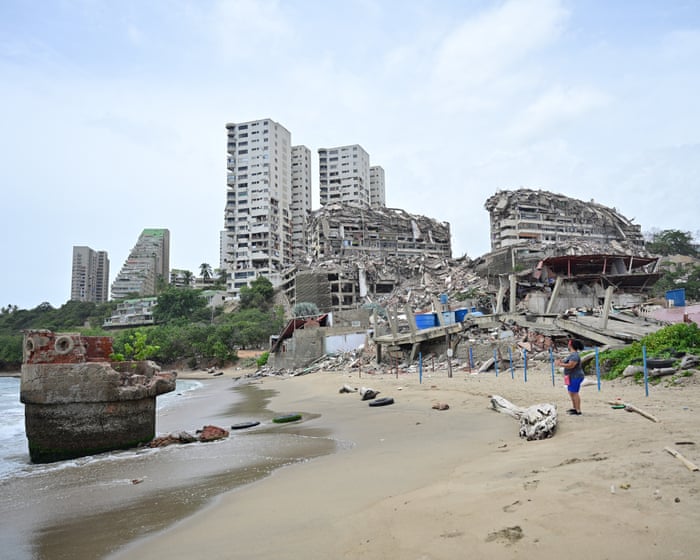
Interim president says unrest will not break out despite anger at official response to the 24 June disasterVenezuela’s interim president has defended her country’s emergency response to the twin earthquakes that have killed more than 3,000 people, vowing the country would not descend into social unr…
agrupados por: earthquake · response · defends · rodríguez
▸ +2 coberturas · 3 fuentes · consenso alto
From a slave economy to a global empire in 250 years.
agrupados por: states · united
▸ +2 coberturas · 3 fuentes · consenso alto
Ukraine’s new offensive on the territory has military stakes far beyond payback.
Rising human rights violations in Turkey should be called out.
How a fundamental tension in the declaration echoed through U.S. foreign policy.
Experts question whether one of the world’s oldest democracies can survive.
Washington and Tehran are grappling over a “memorandum of misunderstanding.”
At 250, the country is struggling to come to terms with the world it created.
Three summer movies reflect a generation’s sensibilities.
Hard power has left its mark on this year’s World Cup.
Can NATO move past a need to keep Trump happy?
The fallout from the Iran conflict and the approaching U.S. midterms may change Trump’s calculations.
A recent spat might be the final nail in the coffin of the trans-Atlantic far right.
Reports of NATO’s demise have been greatly exaggerated.
Addis Ababa’s debt relief process has highlighted divisions in the global financial system.
The two countries announce a “new era” in ties during Prime Minister Tarique Rahman’s trip.
The White House hopes that annual reviews will curb the United States’ trade deficit with Mexico and Canada.
The disasters exposed Delcy Rodríguez’s weak grasp on power.
Trump could be confident his war in Iran would not touch the daily lives of most voters.
But it’s not too late for the continent to claim some technological independence for itself.
Europeans are gaming out their future defense, and it’s unthinkable without Kyiv.
How the United States remade the global environment from 1776 to today.
How Washington shaped global policy toward sex and prostitution.
European countries are hoping that Erdogan can keep Trump from causing chaos.
An intense El Niño threatens to compound trade and energy pain.
Tampering with the Federal Reserve’s independence proved to be a bridge too far.
Tehran insists that it has sole authority over the waterway. Washington isn’t convinced.
The United States should heed its own track record of backing individuals in conflict-affected states.
Even this U.S. administration is confronting limits to the politics of exit.
If the United States wants the cease-fire to last, it needs to take Tehran’s politics seriously.
In 984 days of fighting, “total victory” eluded Netanyahu on all fronts.
Andy Burnham is on the verge of taking power—and of being confronted with his own limitations.
“We don’t have a solution,” an Israeli military official said.
Poland has been successful partly due to strong personal ties, but history suggests that its luck may not hold forever.
Recent scientific reassessments strengthen the case for rapid climate action rather than weaken it.
The U.S. blockade is destroying Havana’s chances of becoming stable and democratic.
How did a private aircraft enter Beijing’s sensitive airspace?
Demonstrators had given undocumented migrants until Tuesday to self-deport or face consequences.
Why can’t coal-rich Indonesia keep the lights on?
The newfound bloc has emerged as a potential winner from the Iran war.
The U.S. president’s policies are driving Europe’s push for technological sovereignty.
The emotionalism in Indian politics obscures the strategic logic of U.S.-India ties.
U.S. imperialism as inspiration and foil.
Energy is Putin’s strongest card in a fuel-hungry region.
Rather than ensuring the free flow of energy, U.S. intervention has only interrupted it.
Beijing can create financial instruments, but it cannot decree demand.
Migration, colonial history, and elite academies have redefined today’s national teams.
Both Washington and Tehran need it.
Before diplomacy can move forward, U.S. negotiators face the daunting task of reestablishing a baseline.
With economic and security interests split between great powers, the region is beginning to consider a third path.
Vice President J.D. Vance isn’t the only one being trotted out to sell an unpopular deal.
As Kinshasa faces multiple crises, a bill risks plunging the country further into instability.
The NATO chief seeks to manage the U.S. president while appeasing other alliance members.
Islamabad could leverage its success as a mediator to secure its own interests.
In Colombia and elsewhere, winning was the easy part.
Policymakers’ approach to automation won’t work for AI.
The best way for governments to save money is to stop wasting it on completely unnecessary weapons.
With thousands of people missing, the death toll is expected to rise.
Like a struggling swimmer, he may take desperate measures to stay afloat.
The president has taken unprecedented steps to end a policy of exclusion, but suspicions remain.
Trump urges defense manufacturers to speed up weapons production after the Iran war.
Should one company—and one person—have this much power?
The Gulf region has shown it’s ready to carry the diplomatic burden of managing Iran.
It’s the latest Latin American country to elect a Trump-backed leader.
Test yourself on the week of June 20: Colombia votes, Starmer resigns, and Rutte meets with Trump.
A new exhibition examines how Western art and colonial aggression made each other possible.
How the war has shifted Iran’s relationship with its proxies.
Washington said Tehran violated the cease-fire.
As the conflict winds down, Beijing is taking notes.
The AI company is back in the U.S. government’s crosshairs.
Financing foreign elections is a curious habit for a one-party state.
The United States is racing ahead where Europe, China, and India struggle.
The Islamic Republic has survived. Now comes the hard part.
Amid the uncertainty of Trump’s deal, how will ships decide when to leave the Persian Gulf?
A military name change signals a broader strategic and diplomatic shift.
Critics accuse Nairobi of capitulating to U.S. interests over those of Kenyan citizens.
$600 million in U.S. foreign aid for global vaccines is at risk.
Read the agreement that the Trump administration has agreed to with Iran’s leaders to end the war.
The White House detailed the deal’s terms after Trump defended it at the G-7.
Coalitions of the willing are creating a “race to the top” on climate change, AI, and critical minerals.
Literally defenseless, Dublin is outsourcing security to Paris.
Qatar’s World Cup became known for migrant worker abuse. U.S. labor systems are similarly exploitative.
Diplomatic fractures between the two strategic partners are likely to outlast the conflict.
Israel is resisting Donald Trump’s demands that it fall in line with his Middle East policy.
Months of fighting revealed that multiple countries can impose costs, but none can impose order.
Foreign intervention is a policy with a long history of disaster.
The Iran war is only the latest in a string of U.S. failures.
Development aid remains the best way to reduce drug production.
A war of choice has turned into a strategic disaster for Washington.
Trump’s willingness to sell out allies should cause a rethink in Taipei.
India’s ambassador to Washington insists “Make in India” doesn’t conflict with “America First.”
A lackluster attitude highlights divisions between the United States and its G-7 allies.
Trump’s expansion of executive power would make even Richard Nixon blush.
Only Silicon Valley looks ahead now.
We may come to miss the hypocrisy.
Beijing’s economic ambitions have been brought back to earth.
They are hardly prepared for the new system.
States across the global north are shutting their doors permanently.
To its most powerful member, it is worth more alive than dead.
As the West debated a green energy future, Beijing was building it.
As an ideology, it’s over. But the relationship is not.
A joint war against Iran might be its apex.
The virtues it extolled—cosmopolitanism and competition—led to its demise.
The end of the world as we know it.
Key issues, like Iran’s nuclear program, remain unresolved.
It’s complicated but not this month, most likely.
The president will feel criticisms from this group most keenly.
Getting Iran to concede on key issues will be a struggle.
But continued Israeli strikes on Lebanon could derail the agreement before it takes effect.