Even during the immediate post-pandemic period, when evidence on the labor-market effects of remote work was scant, there was a strong case to be made for going into the office, especially for younger workers. And now, multiple new studies have vindicated this intuition.
In recent months, Ukrainian drones have successfully struck dozens of sites deep inside Russia, targeting the oil industry, weapons plants, and logistics hubs. But while Ukraine has developed a world-leading military technology to defend itself from a much larger aggressor, drones will not be enough…
In a world of great-power rivalry and hyper-scaling tech behemoths, you would be forgiven for thinking that the bulky bully always has the edge. But as this year's World Cup has shown repeatedly, you would be wrong.
Users are always seeking more control over their social networking experience to make it better, whether to improve privacy or enhance flexibility. Interoperability between social networking platforms like Facebook and TikTok has so many benefits that solve those issues.
Say you’re on multiple pla…
By the end of the 19th-century in the US, it was clear to all interested observers that market power did not automatically or even easily translate into political capital and cultural authority. That is why, unlike the oligarchs of our time, certain Gilded Age capitalists learned how to become a ru…
As debt burdens rise and climate shocks intensify, sustainable financing mechanisms are becoming indispensable. The Islamic Development Bank’s new concessional fund offers a promising model for mobilizing the resources needed to protect development gains and invest in resilience.
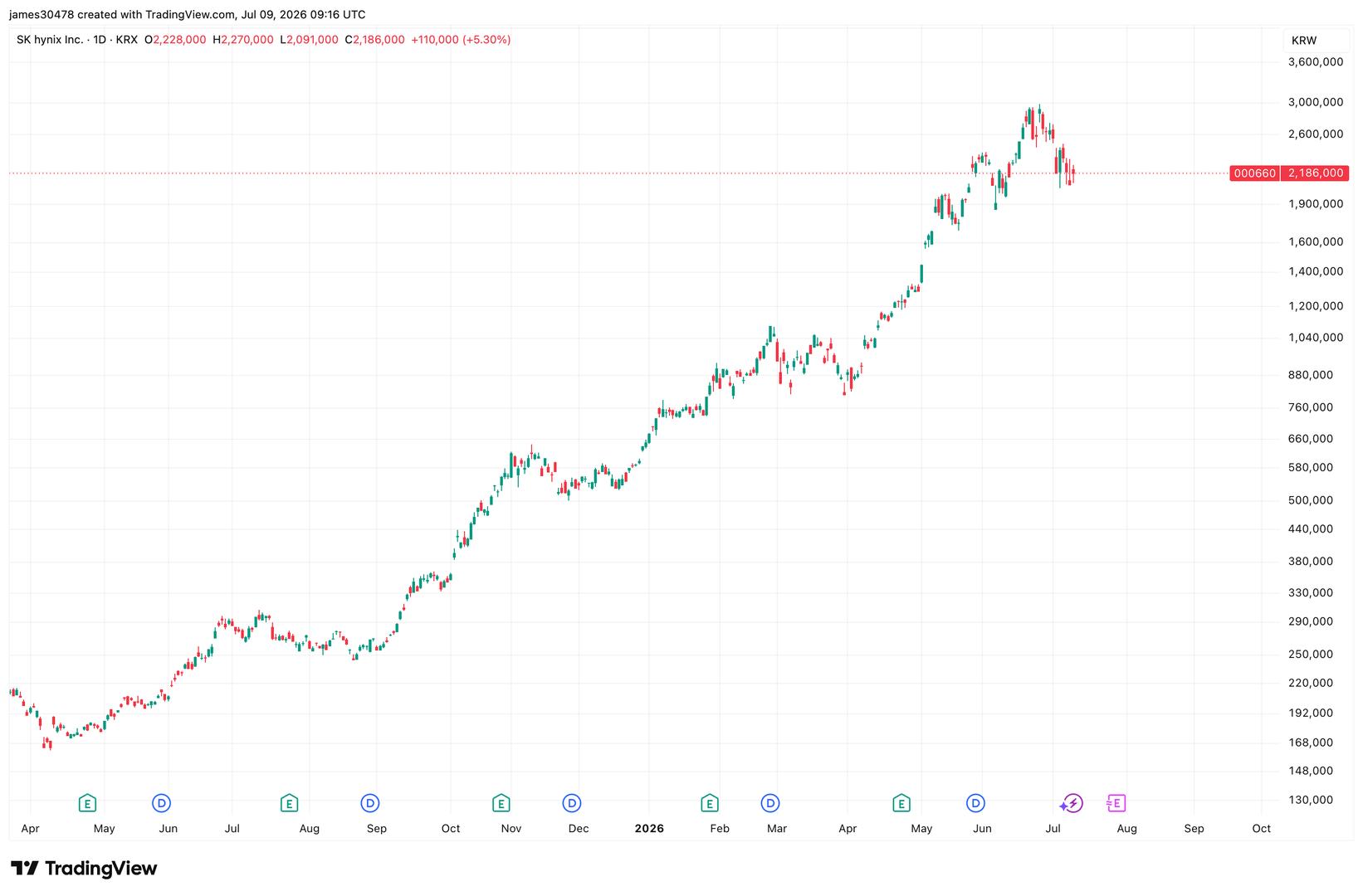
Fueled by more than $1 trillion in borrowed money and rising leverage across the financial system, US stock markets may have entered bubble territory. Two developments could trigger a sharp correction: higher interest rates and a loss of confidence in the handful of tech giants driving the AI boom.
New York Mayor Zohran Mamdani’s Independence Day address was a perfect example of ideology in the positive sense of the term. It overturned both the right-wing populist narrative of the United States and the left-wing "woke" critique with a vision that has the potential to mobilize a majority.
Faced with shrinking concessional finance and rising borrowing costs, Rwanda has worked with the World Bank Group to leverage limited public funds and risk-sharing instruments to unlock private capital at scale and on affordable terms. It's an arrangement holding important lessons for low-income cou…
Alaska, Norway, and Chile recognized the economic and political risks that accompany commodity booms and established sovereign wealth funds to preserve their resource revenues. Argentina’s hydrocarbon- and lithium-rich provinces should learn from their experience.
The wars in Ukraine and the Middle East have exposed a strategic reality that military planners are only beginning to confront: In a data-centric age, digital infrastructure has become part of the battlespace. Data centers and cloud regions are now the digital backbone of military power and economic…
Eschewing the idea of a single truth, the recently deceased English artist David Hockney showed that the world unfolds before us in ways we cannot fully understand. After long clinging to the pretense of certainty, economists would do well to embrace the same insight.
As foreign aid declines, policymakers in lower-income countries must increasingly focus on making better use of scarce resources. When it comes to maternal mortality, that means investing in simple, proven, and affordable interventions for postpartum hemorrhage, pre-eclampsia, and obstructed labor.
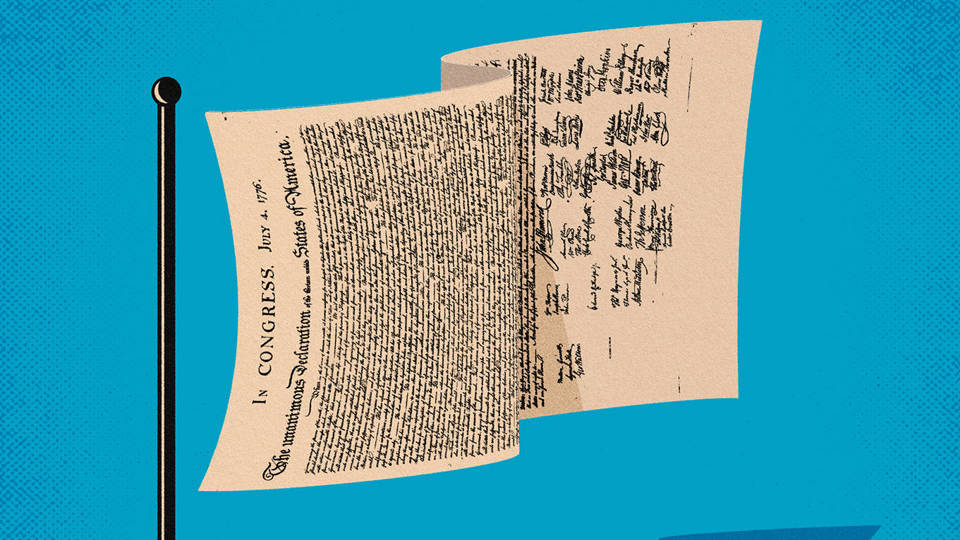
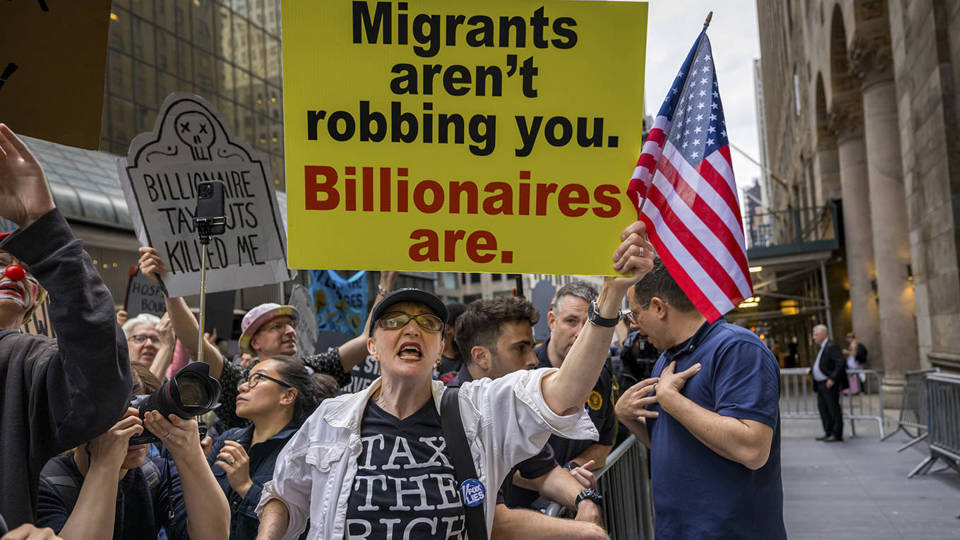
Democracy is a tenacious beast, but it has been riven by contradictions ever since the Declaration of Independence. Nowhere are those contradictions in such sharp relief as in Trump's America.
NATO member states adopted a declaration at their Ankara summit pledging steadfast, unified support for Ukraine’s freedom, sovereignty, and territorial integrity.
While Europe is not just another middle power, nor is it a great power with sufficient economic, military, and geopolitical clout to dictate terms on the global stage. Instead, Europe is the ideal candidate to convene and lead a group of like-minded middle powers, not as a US-style hegemon, but as a…
While Donald Trump was widely expected to lord over this year’s World Cup, which the United States is co-hosting with Mexico and Canada, it has turned out not to be his scene. National teams populated with immigrants, and small-town America’s embrace of the event, go against everything Trump’s MAGA …
In an interview, Turkey’s top diplomat, Hakan Fidan, said the relationship between President Recep Tayyip Erdogan and President Trump could ease NATO tensions.
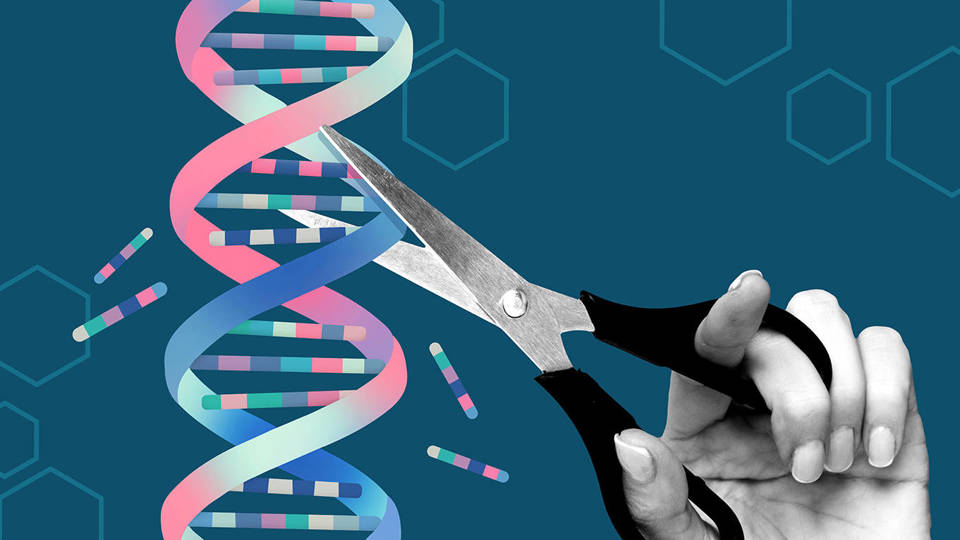
Genetic-engineering tools with which to design one's progeny already exist, and they are being made even more potent with AI—at least for those who can afford such services. In the absence of policy interventions, we will be hurtling toward a tiered society in which economic privileges become biolog…
President Donald Trump is trying to whitewash America’s past. Could rebellion offer a brighter future?
The post The Horrifying Lessons of 250 Years of American History appeared first on The Intercept.
With Armenia's recent elections likely to usher in an era of greater stability—and less Russian influence—in the South Caucasus, neighboring Azerbaijan is well-positioned to deepen cooperation with the US and Europe. But without appropriate conditions, new strategic partnerships with the West could …
Like the Gilded Age robber barons, the United States under President Donald Trump is using trade policy to benefit itself at the expense of all other countries. But now that administration surrogates are openly acknowledging the strategy, all other major trading powers will surely respond accordingl…
A growing awareness of the inequities embedded in the world order has prompted calls for reform. Building a multilateral system that serves the global majority will require redesigning the international financial architecture, especially in relation to sovereign debt and corporate taxation.
Britain’s attempt to crush the American Revolution exposed a constitutional crisis at the heart of its empire. One English statesman saw in it proof that only broader suffrage could check royal power, tame corruption, and ensure that imperial rule remained compatible with liberty.
Without a EU-level framework capable of turning resources into scale, the bloc’s defense capabilities will remain limited, no matter how much member countries spends. If Germany, in particular, insists on going it alone, Europe could remain fully dependent on the US for key assets.
If Ukraine can continue to disrupt Crimea, strike more targets in the heart of Russia, frustrate Russia’s frontline forces, and pile more pressure on Russia’s hobbled economy, President Vladimir Putin will feel increasingly cornered. The temptation to escape his predicament through a game-changing a…
Glacial growth, aging welfare states, and a shortage of centrist leaders suggest Europe faces a major debt crisis in the years ahead. But its emphasis on leisure over work could become a decisive advantage, positioning the continent as the leading model for thriving in an age of AI-driven abundance.
The Trump administration’s decision to impose export controls on Anthropic’s latest models is emblematic of the incoherent and shifting response from policymakers worldwide to the rapidly advancing AI sector. To ensure that these tools do not court disaster, governments must establish meaningful gua…
Some health advocates believe that weakening intellectual-property protections and capping prices for the most advanced cancer treatments would expand access in developing countries. But this well-intentioned argument overlooks an inescapable reality: without strong incentives for innovation, such t…
Most Gulf observers agree that the old security order is dying. But none of the most commonly proposed options—buying more advanced weapons, seeking protection from new partners in the Global South, or building stronger national militaries—is sufficient on its own.
The tech industry is asking Americans to embrace AI at a moment when trust in government is declining. While these may seem like separate issues, persuading people to trust AI will be far more difficult if they do not trust the institutions responsible for regulating it.
Capitalizing multilateral development banks in Africa is a strategic investment in the continent’s economic transformation. To mobilize adequate funding will require leveraging domestic savings, pursuing monetary integration, using innovative financing mechanisms, and strengthening regional capital …
Policymakers obsessed with competitiveness both in Europe and beyond need to abandon old orthodoxies. New research finds that for two decades, capital in Europe has been abundant and cheap, and corporate profits strong, yet investment, productivity, and wages have stalled, and labor's share of total…
Despite being vital to health, security, and economic prosperity, water is often taken for granted. As supplies come under growing strain, water-related considerations will shape economic policy and political decision-making, as well as firms’ investment decisions, risk assessments, and corporate st…
Over the last 12 years, Indian Prime Minister Narendra Modi has overseen dizzying progress in economic modernization and state capacity-building, as well as dismaying setbacks on institutional independence and minority inclusion. This record offers important insights into how India will navigate the…
The struggle between democracy and oligarchy in classical Greece was bitter, with oligarchies relying on skillfully designed political institutions to shore up unpopular regimes. As concerns grow over the “rule of the few” in the United States, Americans should consider how their own institutions ar…
Around the world, childhood is being reprogrammed by digital technologies that shape how young people learn, play, and connect. But children and young people are not experimental subjects, a captive market, or a commodity, which is why we must shape digital environments that protect and support thei…
To convert NATO members' resources into military capabilities, setting defense as a strategic priority, increasing spending, and improving procurement systems are all steps in the right direction. But member countries will need to expand their industrial capacity—and that requires much more.
While Nobel laureate economists Paul Krugman and Philippe Aghion disagree over how to measure Europe’s productivity gap with the United States, both overlook the value of its accumulated assets. That blind spot obscures the real story: Europe is living off a remarkable inheritance it has yet to conv…
Work and employment play a uniquely powerful role in structuring people’s days and conferring a sense of belonging, status, and self-worth. Although AI boosters insist that people would organically find new sources of meaning if most jobs are automated, there is no reason to assume so.
The longtime Federal Reserve chair inferred from past crises that lightly regulated markets, while prone to excesses, could right themselves sufficiently to avoid imperiling the financial system and the economy. The correct lesson would have been that markets require strict regulation, and that comp…
In promoting his “deal” with Iran, US President Donald Trump has tried to dress up a humiliating defeat as a victory. While it’s tempting to blame this outcome on incompetent leadership, it stems more from the policies and institutions that have allowed entertainers and profiteers to rise to power.
Those who follow only intergovernmental negotiations or debates in the media might think that nothing has changed in the decade since the United Kingdom's voters decided to leave the European Union. Yet new polling finds that large majorities on both sides of the English Channel now support re-engag…
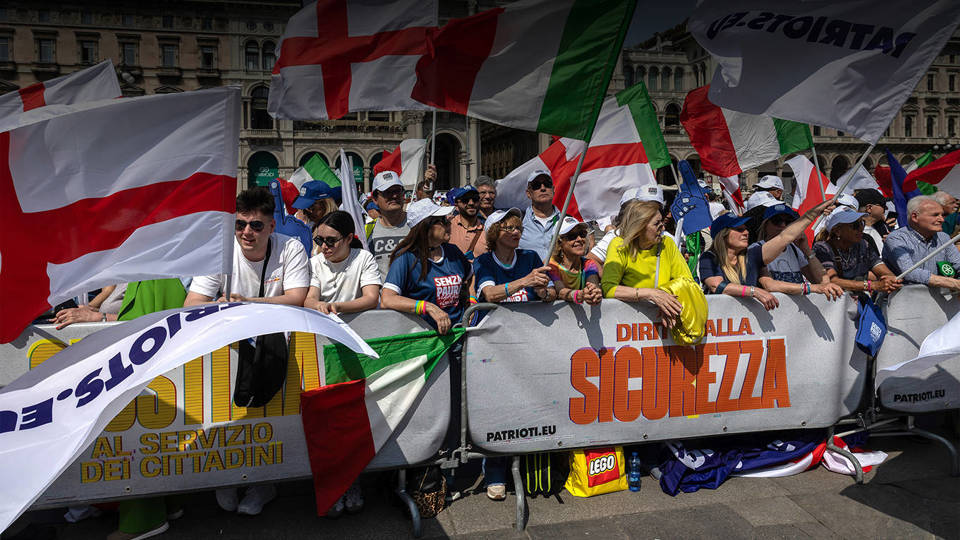
Germany’s 2026 World Cup team, like so many others in the tournament, shows that loving one’s country and welcoming newcomers are not incompatible impulses. Although activists on the far left and the far right would have us believe otherwise, most ordinary people implicitly recognize this.
Economic stabilization has been a significant achievement for Latin America and the Caribbean, a region with a long history of financial crises. But these countries need a well-sequenced reform agenda to attract private investment and create the growth engine that will translate hard-won gains into …
For too long, policymakers, economists, and investors have focused on whether microfinance actually helps people, reducing a complex issue to a meaningless yes-or-no verdict. The most important questions concern how loans are designed, delivered, and regulated, who receives them, and what they are u…
Today’s seemingly nonstop international tumult is not as unintelligible as it seems. What pundits lazily describe as chaos is the culmination of developments that were long in the making and arrived at a time when the international system was no longer able to prevent or mitigate geopolitical shocks…
Cities have shown that a combination of adaptation measures and energy efficiency can save lives, improve well-being, reduce energy costs, and create conditions for sustainable growth. A new partnership seeks to help mayors and city leaders scale up these efforts through technical and financial assi…
Some may argue that the world’s first trillionaire is a story of technological triumph and a win for American capitalism. But markets have not bet on cutting-edge technology or a company too big to fail, but rather on the idea of a mega-monopolist with wealth and influence so vast that the US govern…
Following a decades-long effort to lay the foundations for economic dynamism, Greater Manchester has become the UK’s fastest-growing region. While the Manchester model cannot be precisely replicated at the national level, it does carry important lessons for outgoing Prime Minister Keir Starmer's lik…
The current US administration's openly corrupt style of crony capitalism is the antithesis of the institutional foundation on which the US economy was built. The winners in the new oligarchic competition are not those who make the best products, but rather those who are best at flattering the mad ki…
Once firms and economies ascend to market dominance, they often kick away the ladder behind them and erect barriers to market entry to stymie would-be challengers. But developing countries can and do leapfrog incumbent technologies, and conditions for doing so may be particularly favorable now.
If AI delivers as promised and fundamentally transforms the economy, we will have moved from the current investment phase, where AI builders dominate, to one where AI users will reap the greatest reward. That is what happens every time an innovation becomes a general-purpose technology.
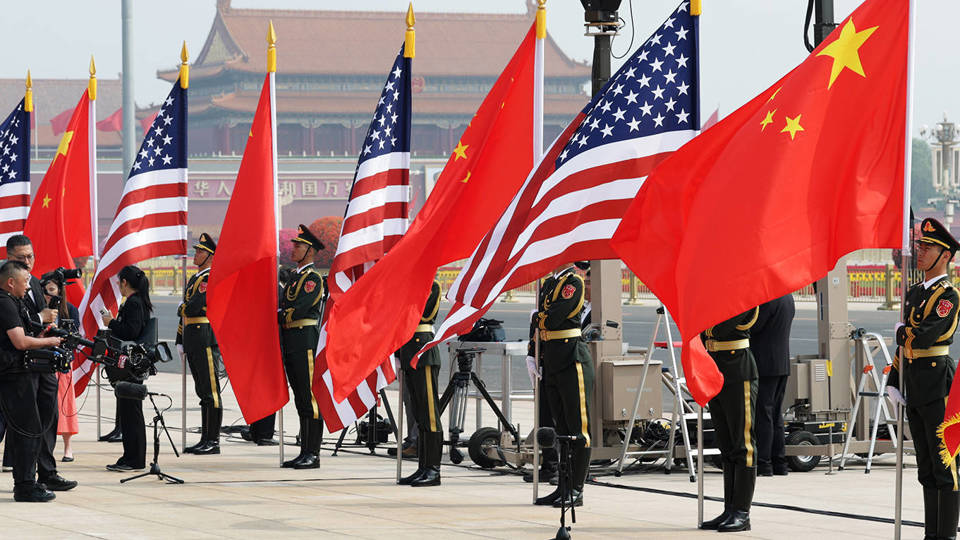
At their summit last month, US President Donald Trump and Chinese President Xi Jinping seemed to recognize that they are in the same boat. If either the United States or China tries to cripple or decouple from the other, it will harm its own firms, consumers, financial markets, and innovation ecosys…
With Ukraine reclaiming territory, mounting drone strikes deep in Russian territory, and draining Russia’s coffers, Vladimir Putin would do well to seek a negotiated freeze to the conflict. But there is no guarantee that he will, not least because he might not grasp the situation Russia is in.
For a brief period after the Cold War, Americans persuaded themselves that the liberal order had become self-sustaining. And yet, any rules-based system elaborate enough to govern and interpret its own operations will eventually confront questions that its rules cannot answer.
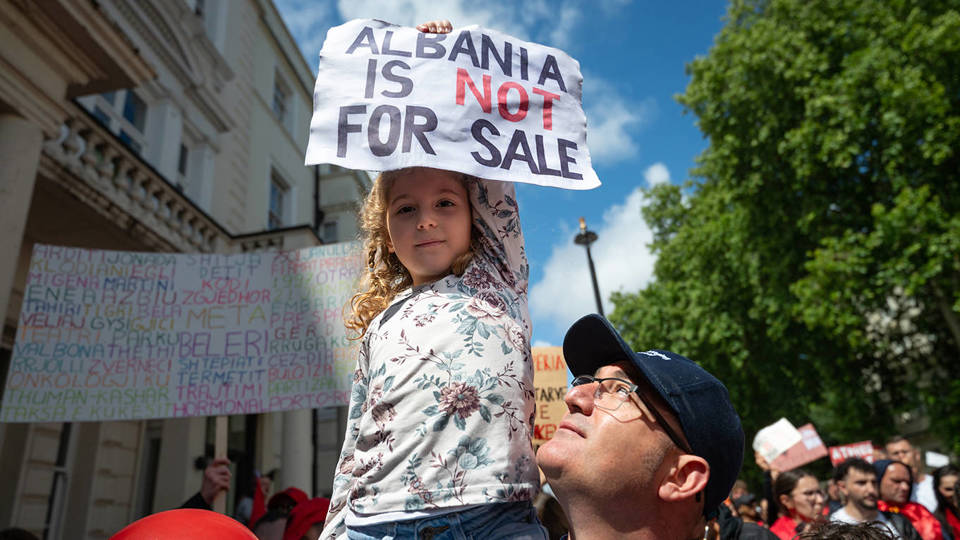
Although recent political mobilizations in Hungary, Albania, and other parts of Central and Eastern Europe could be described as populist and nationalist, they have little in common with the aggressive ethnonationalism that MAGA professes. Could they be a model for a new form of politics?
When China’s leaders first acknowledged the need to rebalance the economy nearly two decades ago, it seemed like a matter of when, not if. But with the household consumption share of Chinese GDP remaining stubbornly low, officials’ promises to boost domestic demand have lost all credibility.
Although textbook microeconomics shows why less energy-market fragmentation would be better for Europe as a whole, that does not mean it would be a good deal for countries producing low-carbon electricity at minimal marginal cost. In fact, if more integration creates free riders, the political backl…
When investors say there are no “bankable” projects in developing economies, they are typically referring less to project quality than to the cost of capital. But the assumptions driving up risk premia are not supported by the evidence, and until this changes, the misallocation of capital will conti…
While the recently announced US-Iranian memorandum of understanding is certainly good news, it is not definitive. The path from a statement of diplomatic intent to a fully restored, non-inflationary energy supply chain is fraught with political, technical, and physical risks.
The venue on the South Lawn for UFC Freedom 250 was built, approved, lit, filmed, defended, watched, and enjoyed as part of a celebration of freedom. President Donald Trump’s chosen object to represent that celebration was a cage.
European businesses need simpler rules, faster permitting, affordable energy, stronger infrastructure, and a fully functioning single market. The longer that European policymakers fail to deliver on these policies, the greater Europe’s competitiveness challenge will become.
The Gulf has made establishing a sovereign wealth fund seem like a strategic—and glamorous—choice, leading countries like Canada to launch their own. But Latin America has run this experiment many times over the years, offering a more realistic view of an SWF’s pitfalls and promise.
As funding falls for global public health, calls for a country-led system have grown louder. Such reforms are necessary, but they must not come at the expense of new vaccines, medicines, and diagnostics, which can be delivered by strengthening mechanisms—such as product development partnerships—that…
When it comes to the relationship between the United Kingdom and the European Union, political expediency and economic logic both point in the same direction. A majority of British voters now believe that Brexit was a mistake, and they are looking for a leader who will put the issue back on the nati…
Artificial general intelligence could dramatically increase human prosperity and free people from countless mundane tasks. But unless its benefits and ownership are broadly shared, it could deprive billions of workers of their livelihoods and pave the way for a new form of techno-authoritarianism.
The US government’s abrupt decision to suspend foreign access to Anthropic’s Fable 5 and Mythos 5 models clarifies what “AI sovereignty” is really about. In the emerging AI economy, competitive advantage will come not from owning a single model, but from being able to evaluate, select, and orchestra…
In 1776, Adam Smith and America’s founders envisioned an economy that allowed individuals to pursue their own material well-being, with minimal government intervention. Today, America’s Republican Party claims to be committed to restoring that laissez-faire ideal, even as they make a mockery of its …
The true nature of Britain’s “special relationship” with the United States has far more to do with American financiers’ willingness to keep borrowing to purchase British government debt than with history, culture, or Britain’s defense needs. Every UK Prime Minister must bear this burden, which is ra…
US President Donald Trump says that he "calls the shots" on negotiating with Iran, and Israel has no choice but to submit to a deal that undermines its security interests. But a deal that makes Trump the protector of Lebanon—and, by extension, Iran-backed Hezbollah—could put the US and Israel on a c…
Global warming is already uprooting communities and impoverishing people who remain in vulnerable areas—a crisis that is often overshadowed by the focus on decarbonization. But the Global Climate Mobility Principles offer policymakers a framework for ensuring that these individuals maintain their ag…
It would be easy—and a mistake—to blame the US Federal Reserve’s many blunders on corrupt bureaucrats or imagined conspiracies. The truth of the matter is that the central bank relies on an outdated regional map and lagging indicators that no longer tell the whole story, while battling macroeconomic…
America’s swaggering foreign policy, as displayed most recently in US President Donald Trump’s unprovoked bombing campaign against Iran, can be traced back to its founding. The Declaration of Independence’s vitriol toward Indigenous people illustrates how conquest underpinned the ideal of liberty.
Although the liberal international order was always hierarchical, it was defensible because it allowed for restraint, negotiation, and benefits extending beyond the inner circle. As that internal moderating project fails, all that will remain is the old hierarchy and whatever resentments it engender…
While American and international news coverage of AI tends to focus on a handful of Silicon Valley labs, China's more pragmatic approach to leveraging the technology could ultimately be the bigger story. What the Chinese leadership sees in the technology is nothing less than a master key for its eco…
The Declaration of Independence spoke of all states as being "separate and equal," reflecting the founders' deference to the norms of international law and practice. Yet 250 years later, Donald Trump's administration has inverted this posture, much to the detriment of America's standing in the world…
The American founders’ understanding of political community was ethnically and racially restrictive in ways that Americans have since repudiated. But the Declaration of Independence’s underlying logic and treatment of rights and what it takes to secure them remains as cogent as it was 250 years ago.
The American Dream, with its basis in Thomas Jefferson’s immortal words, was one of the most powerfully generative ideas ever conceived. But the economy and impersonal systems it helped to bring into being are now shaping society and its individual members, rather than the other way around.
Whether they were agreeing or arguing, the new countries that emerged across the Americas after the American Revolution influenced each other. Together, they helped shape the global development of modern democracy and the social and political movements that have shaped it ever since.
Although revolutions would surely have occurred had the United States never broken from Britain in 1776, the Declaration of Independence gave later anticolonial movements inspiration and the language to shape their own aspirations. It offered a universal blueprint, even as the US itself adopted the …
Notwithstanding recent setbacks for illiberal, populist, and authoritarian leaders in some countries, good-governance groups and experts on democratic decline continue to document a disturbing global trend toward “autocratization.” What remains to be seen is whether enough voters will wake up to the…
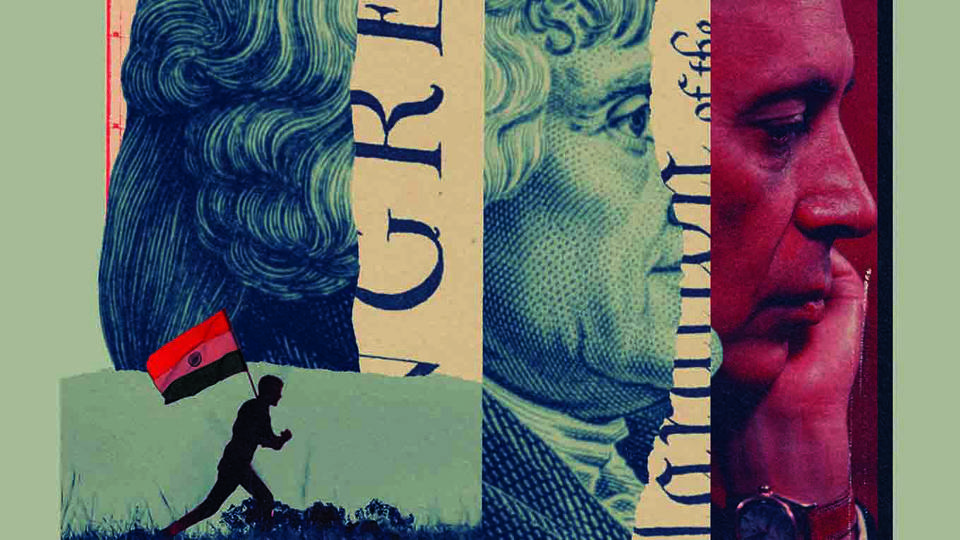
The Declaration of Independence continues to challenge countries, including the US and India, to measure themselves against the ideals they profess. But in a century marked by rising inequality, an authoritarian resurgence, and the emergence of new forms of domination, measuring up will become only …
The growing fusion of economics, security, and technology has altered the nature of 21st-century interdependence, and Canada has responded by being more intentional. Rather than automatically serving as an extension of US-centered systems, it is creating more options across a wider network of relati…
Far from two sides of the same coin, free-market capitalism and democracy are fundamentally incompatible. The only way to restore US democracy is to transform the system, so that it compensates innovators but limits their market power, while ensuring that the benefits of economic progress are more e…
For African-Americans, the Declaration of Independence was nothing but a “thin veil to cover the crimes” of slavery, as Frederick Douglass put it. Inspired by Haiti’s Declaration of Independence, free and enslaved Black people in the US found themselves subverting America’s founding document to achi…
Of the delegates who assembled in Philadelphia in 1776 for the Second Continental Congress, only Thomas Jefferson possessed the skill, knowledge, and linguistic gifts to make the Declaration of Independence an immortal text. He was the self-appointed conscience of America, and sensational imagery wa…
Britain’s attempt to crush the American Revolution exposed a constitutional crisis at the heart of its empire. One English statesman saw in it proof that only broader suffrage could check royal power, tame corruption, and ensure that imperial rule remained compatible with liberty.
At first glance, reports that the US and Chinese governments are both considering taking stakes in national AI champions would seem to suggest a convergence between the world’s two leading AI powers. But a closer look reveals stark differences in their underlying strategies.
The French G7 presidency’s focus on global imbalances is both welcome and problematic. While long-standing trade imbalances between the United States, Europe, and China are, if anything, becoming even more troublesome, the leaders’ summit in Évian-les-Bains will do nothing to address the problem.
The most likely outcome of the Iran war is not peace but an unsatisfying ceasefire that leaves the underlying issues unresolved. This will mean an uneasy equilibrium in which Gulf countries go their own way, US influence wanes, and the regional order remains unsettled.
Elevated oil prices, potentially strong El Niño conditions during the monsoon season, and the tariff-induced fragmentation of global trade are bearing down on the Indian economy and will likely be a drag on GDP growth. But these adverse conditions may be a blessing in disguise if they force India to…